LeadBoba vs RocketReach: Which B2B Lead Generation Platform Is Better in 2026?
One platform helps you find specific people. The other helps you discover businesses and manage the entire sales workflow. Here's an in-depth look at how LeadBoba and RocketReach actually compare.
Two very different philosophies
Finding the right prospects is one of the most important parts of B2B sales — but businesses can approach lead generation in different ways. Some platforms focus on finding specific people and their professional contact details. Others focus on discovering businesses, managing prospects, and supporting the entire sales process. RocketReach and LeadBoba represent these two different approaches.
RocketReach is primarily a contact discovery platform that helps users find professional emails, phone numbers, and profiles of individuals working at companies. LeadBoba focuses on business lead generation by discovering companies through Google Maps and website analysis, then helping users manage, contact, and organize those leads through CRM and AI-powered sales tools.
In short: RocketReach helps users find people. LeadBoba helps users discover businesses and manage the complete lead generation workflow.
Finding a person vs. finding a business
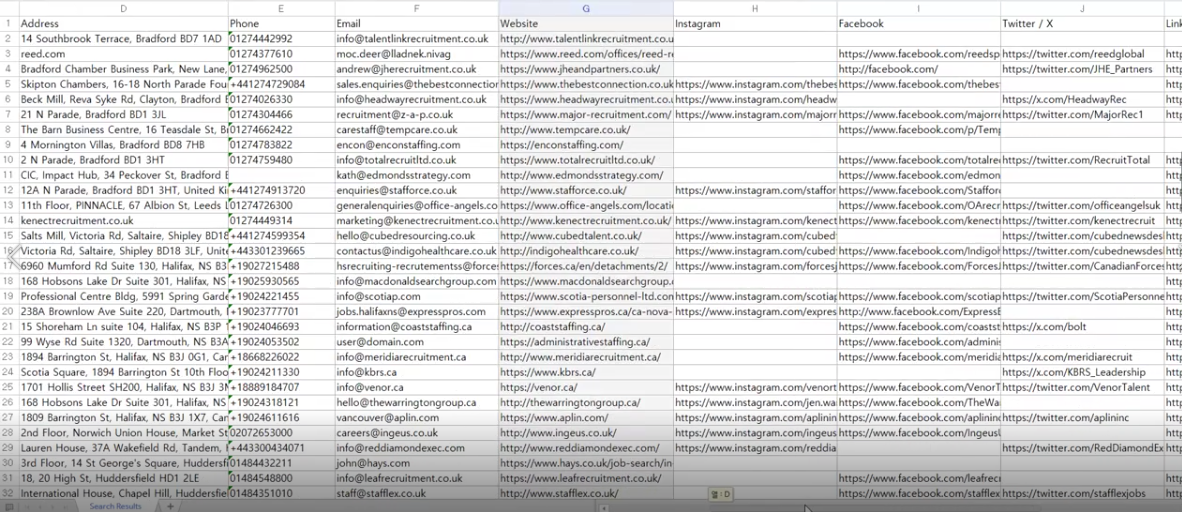
This is the biggest difference between the two platforms. RocketReach is person-focused: users usually search for a specific employee, a job title, a professional contact, or a decision maker — for example, "find the VP of Marketing at a SaaS company."
LeadBoba is business-focused: users usually search for companies, local businesses, industries, and locations — for example, "find all plumbers in London," "find restaurants in Manchester," or "find dentists in Birmingham."
This makes LeadBoba especially useful for local business sales, agencies, freelancers, and SMB outreach — while RocketReach fits better when you already know exactly who you’re trying to reach.
Millions of real-world businesses, one search away
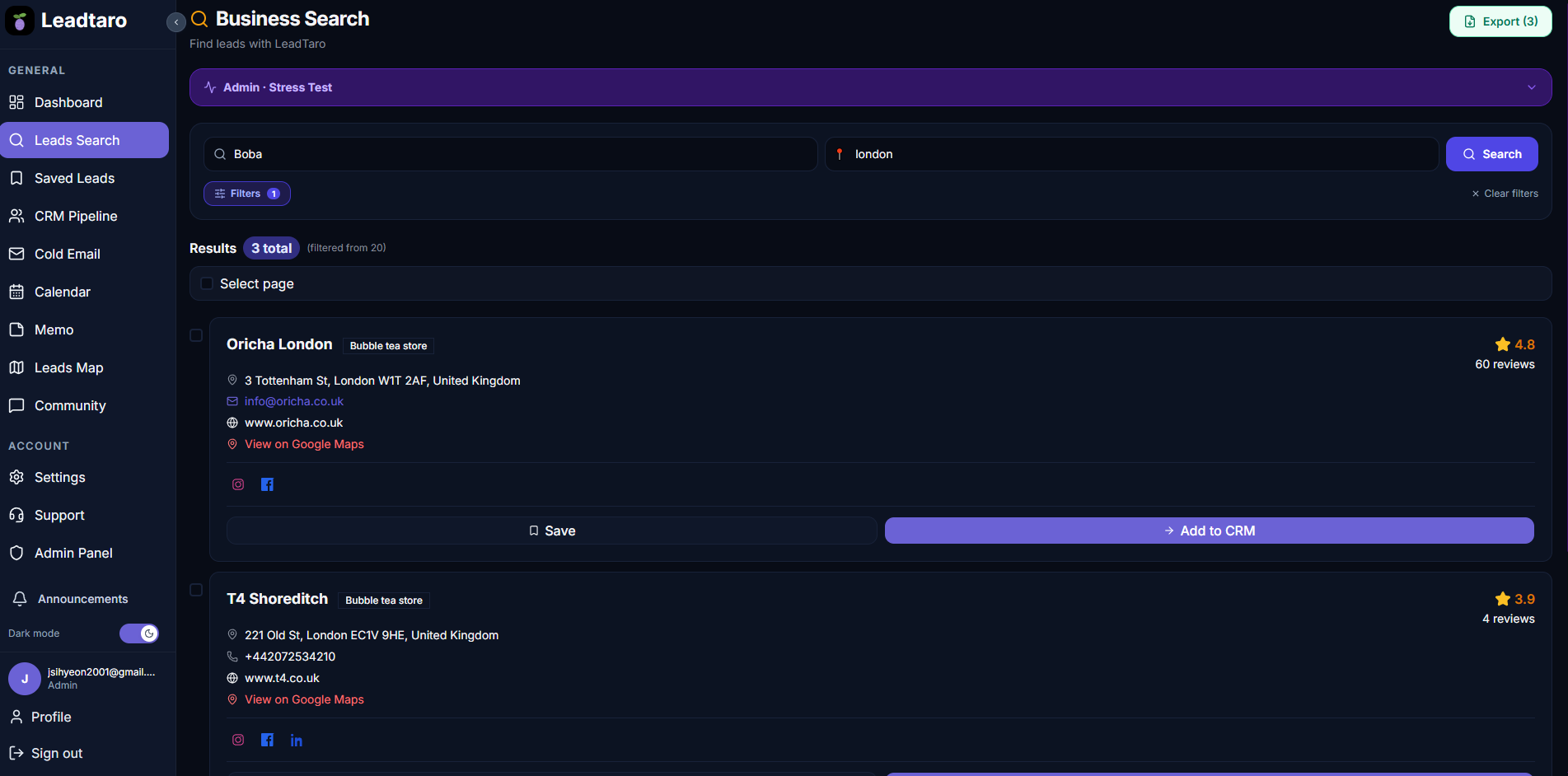
Google Maps contains millions of real-world businesses. LeadBoba allows users to discover local service providers, restaurants, agencies, professional services, retail businesses, and companies worldwide, collecting business names, phone numbers, emails, websites, addresses, Google ratings, review counts, and social media profiles.
RocketReach does not focus on Google Maps business discovery — it’s built around finding individuals and their professional contact details, not local businesses by location.
From finding contacts to managing the relationship
RocketReach mainly focuses on finding contact information. Users often need separate CRM software after collecting contacts.
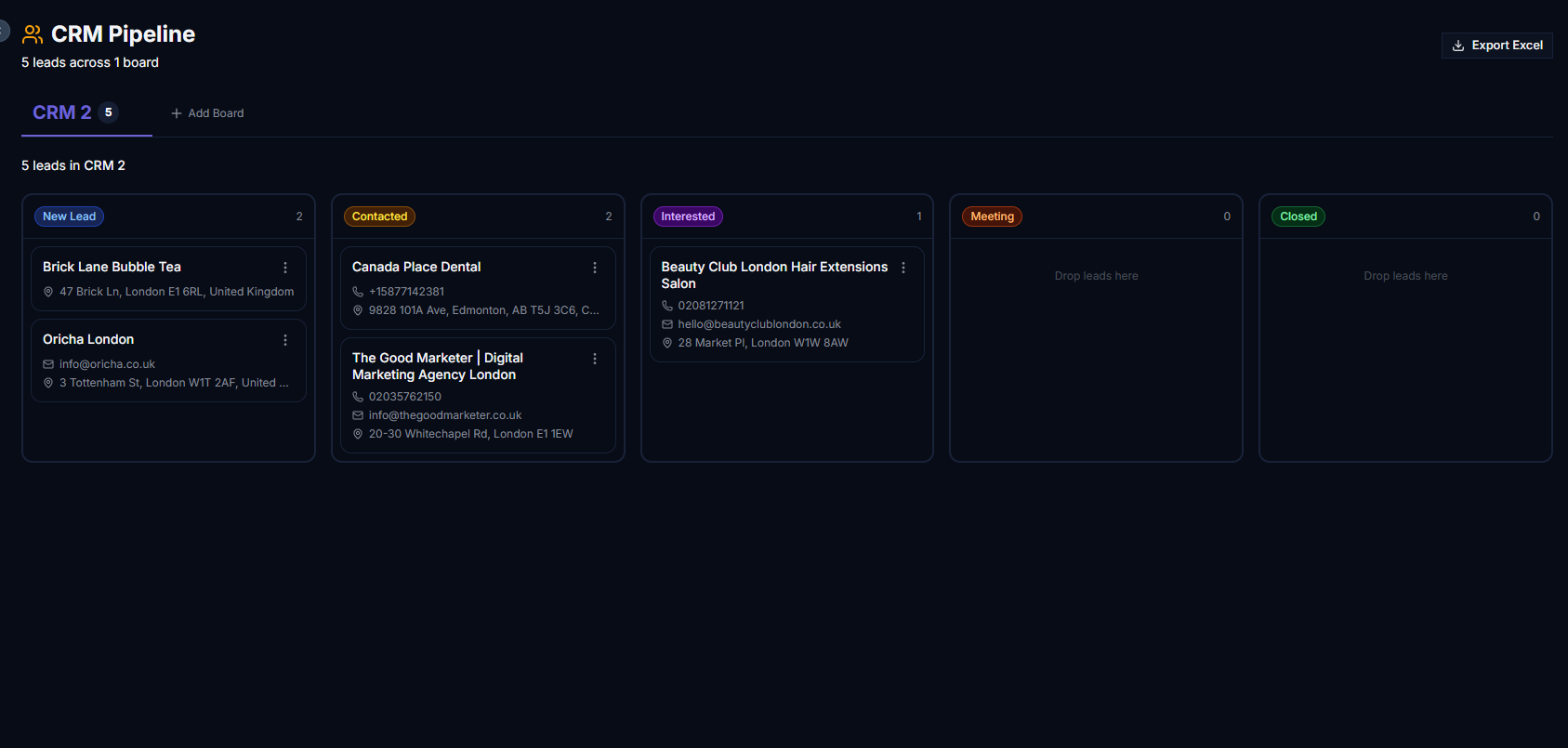
LeadBoba includes built-in CRM functionality, so the same platform that finds a lead can also manage it going forward.
- Sales pipelines
- Lead-saving functionality
- Lead status tracking
- Custom notes
- Organized prospects
- Lead scoring
- Search history review
This keeps the entire lead generation workflow inside one platform instead of exporting data into a separate tool.
Contact discovery vs. AI-assisted outreach
RocketReach focuses primarily on contact discovery rather than AI-powered outreach.
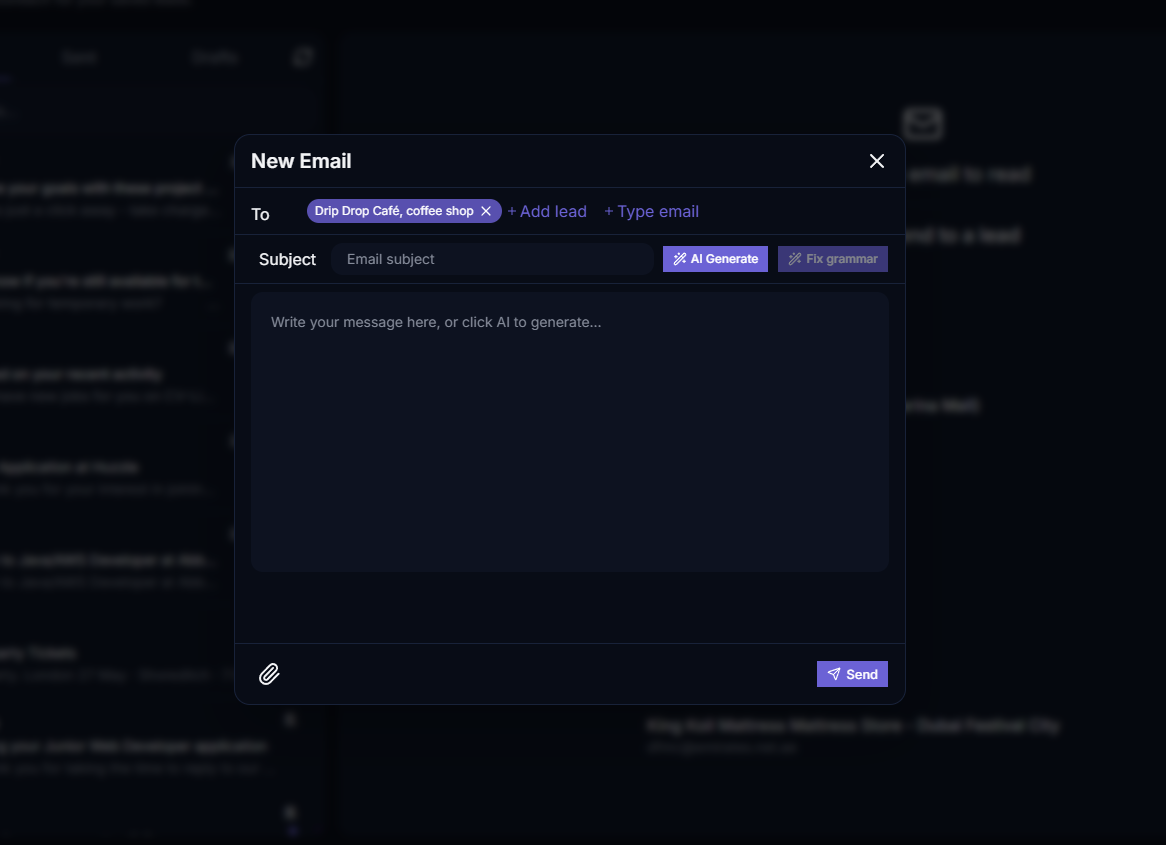
LeadBoba includes AI-powered writing tools that help users quickly move from finding leads to starting conversations. Users can:
- Generate cold emails
- Improve grammar
- Rewrite sentences
- Adjust tone
- Create personalized messages
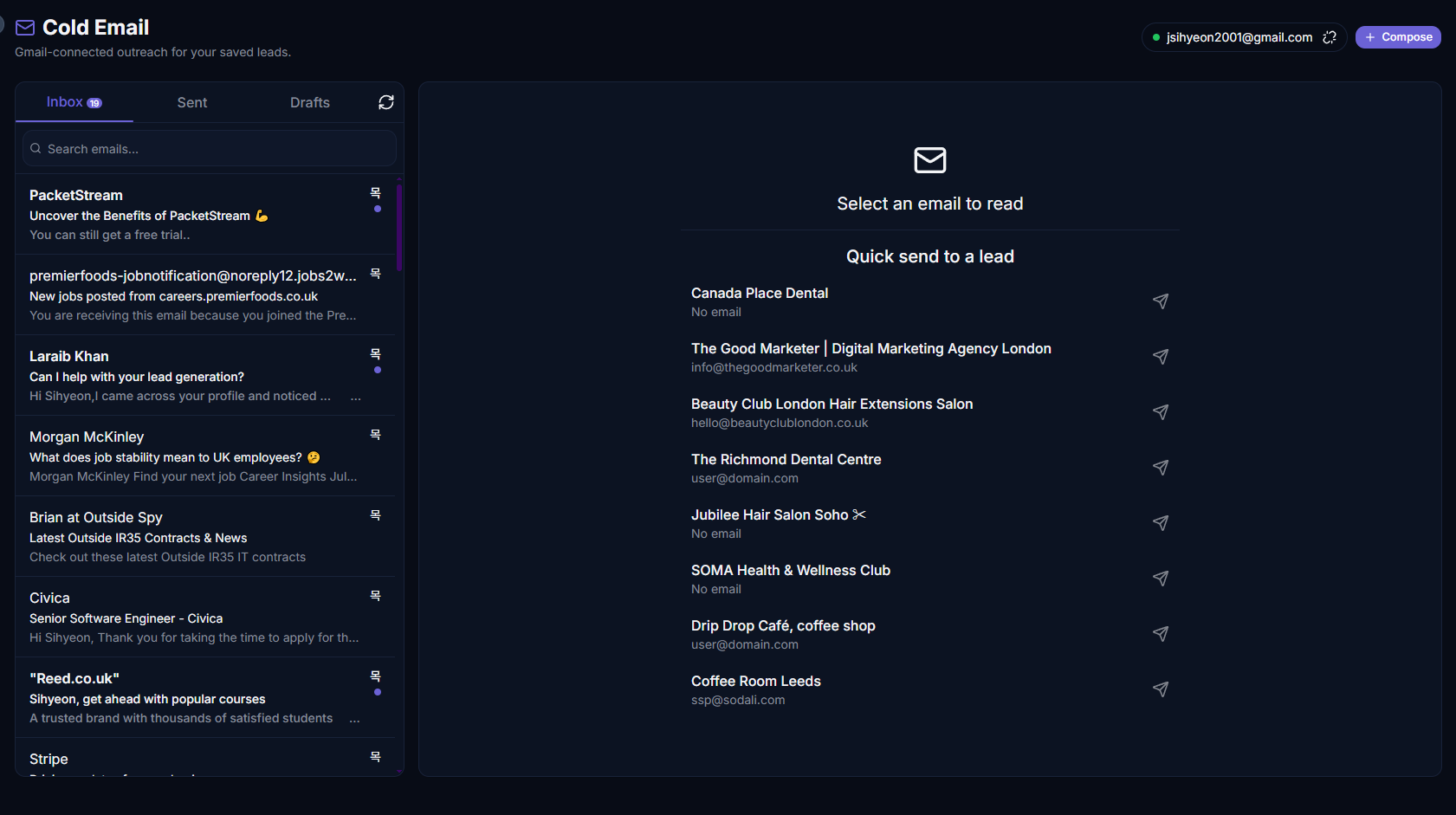
Connecting prospecting and communication
LeadBoba integrates with Gmail to connect lead generation and communication directly. Users can send emails from LeadBoba, attach files, manage conversations, and keep communication history connected to each lead.
RocketReach does not include a comparable built-in email-sending integration — after finding contacts, outreach typically happens through a separate email or sales engagement tool.
This creates a smoother workflow between prospecting and outreach.
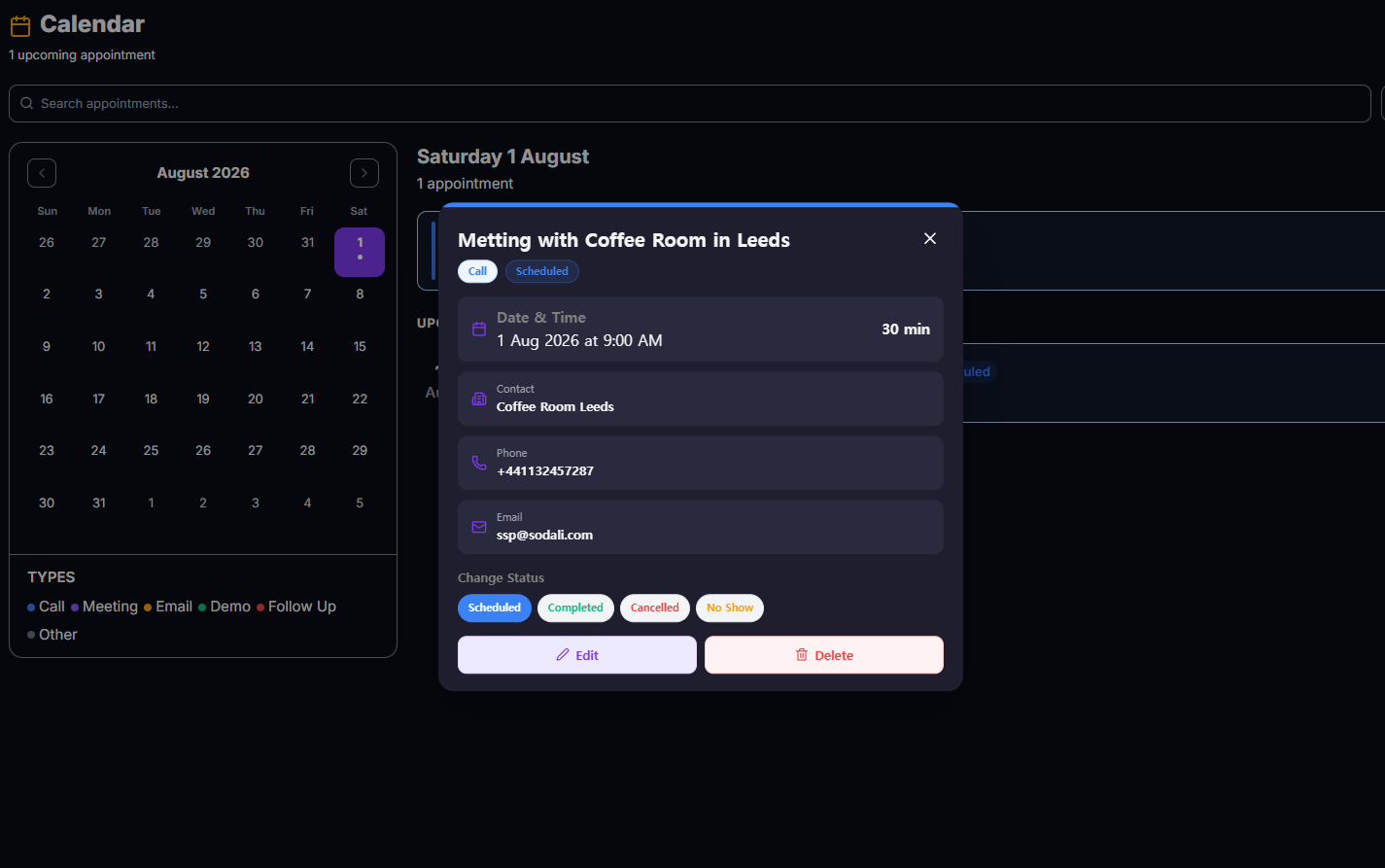
Keeping meetings and follow-ups on schedule
LeadBoba includes built-in calendar functionality that allows users to organize meetings, reminders, and follow-up activities alongside their leads.
RocketReach does not provide this kind of calendar or meeting-scheduling layer — it stays focused on contact search and lookup.
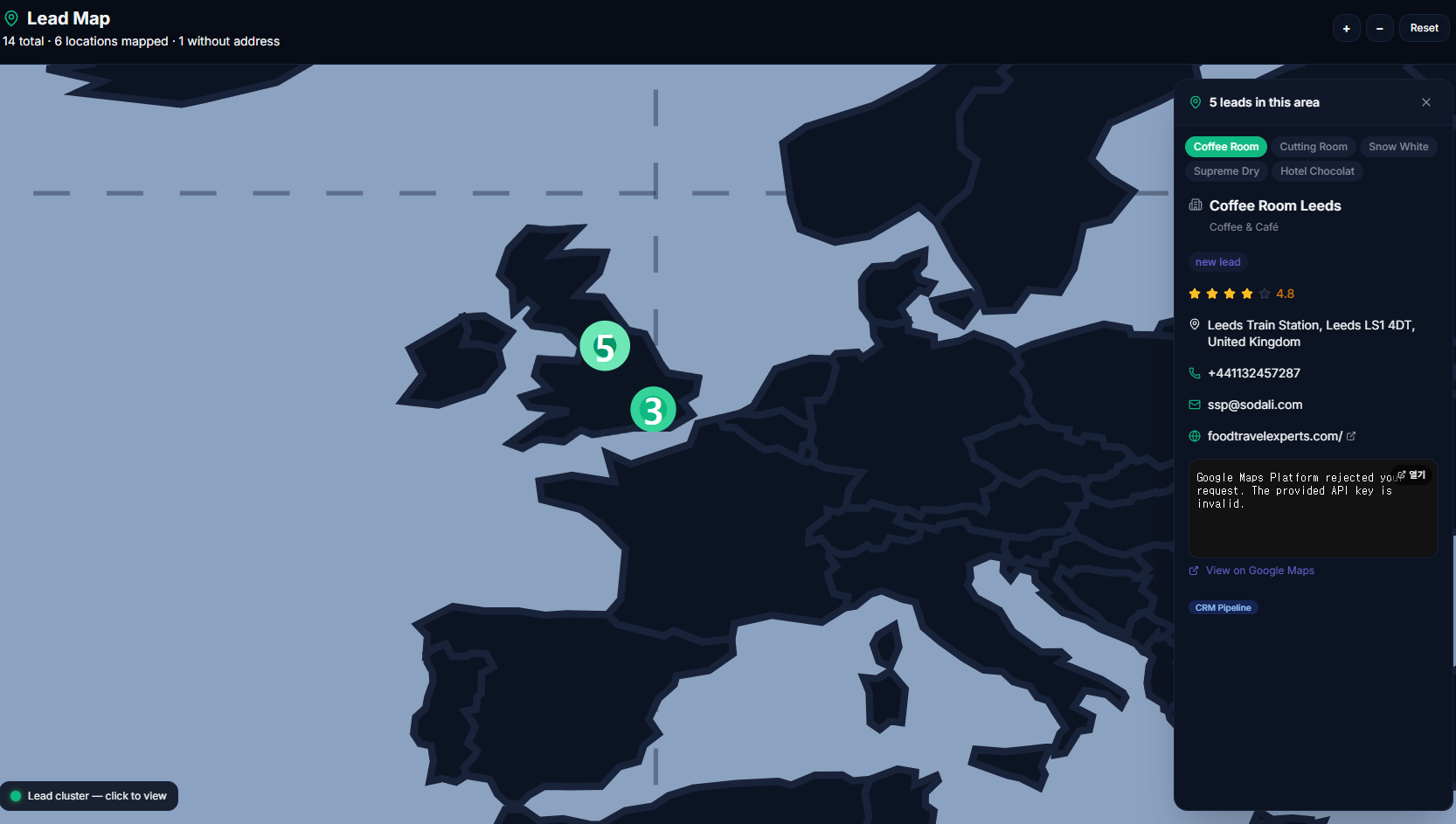
Seeing where your pipeline actually lives
LeadBoba includes an interactive world map that displays saved leads geographically, helping businesses understand market opportunities, geographic trends, and expansion possibilities.
RocketReach does not offer a comparable geographic lead-discovery or visualization view, since it isn’t built around finding businesses by location in the first place.
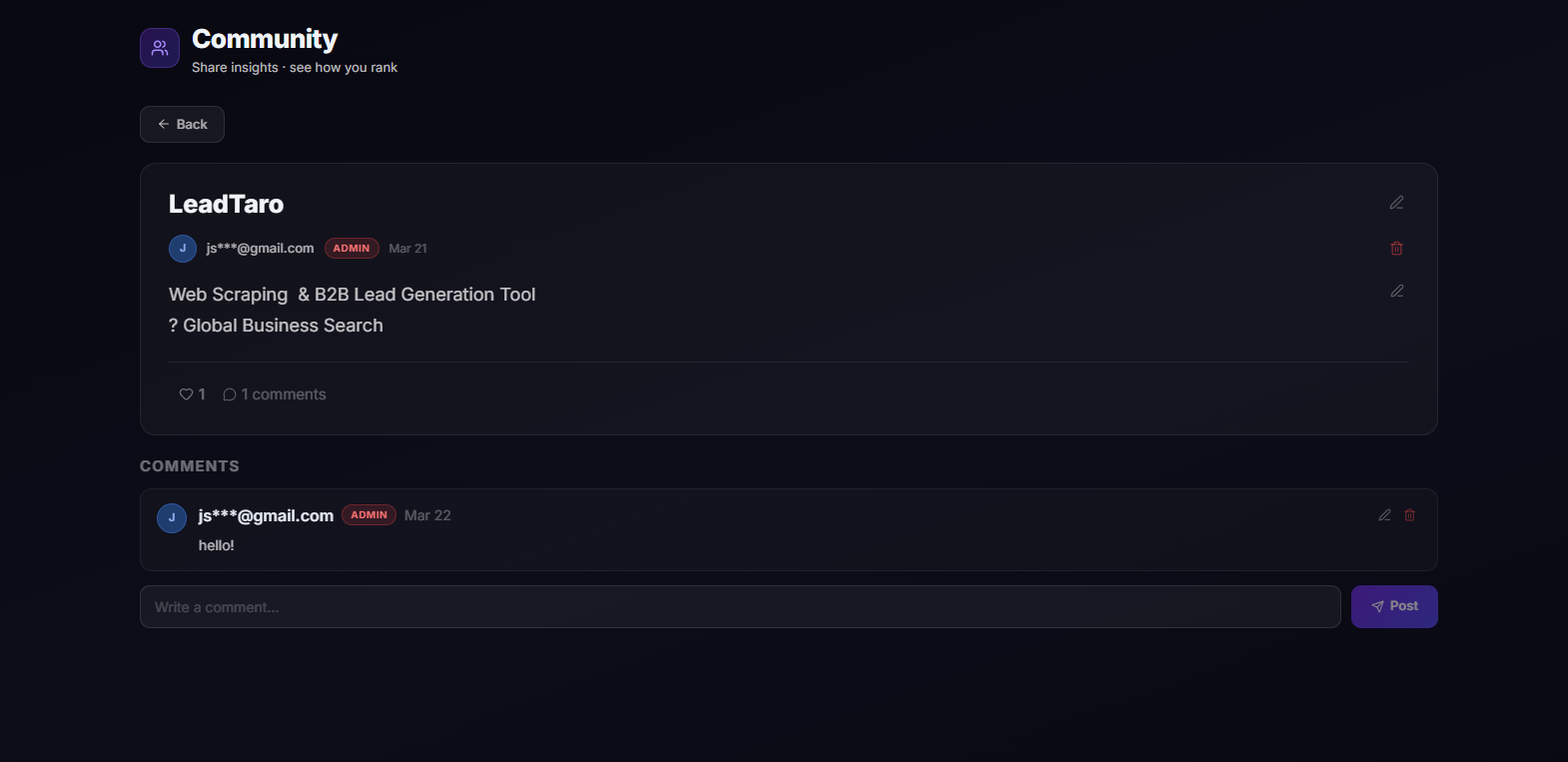
A contact lookup tool vs. a broader ecosystem
LeadBoba also includes a community space where users can share:
- Sales strategies
- Marketing ideas
- Industry trends
- Lead generation techniques
- Business insights
RocketReach is centered on contact search and export rather than a peer community layer.
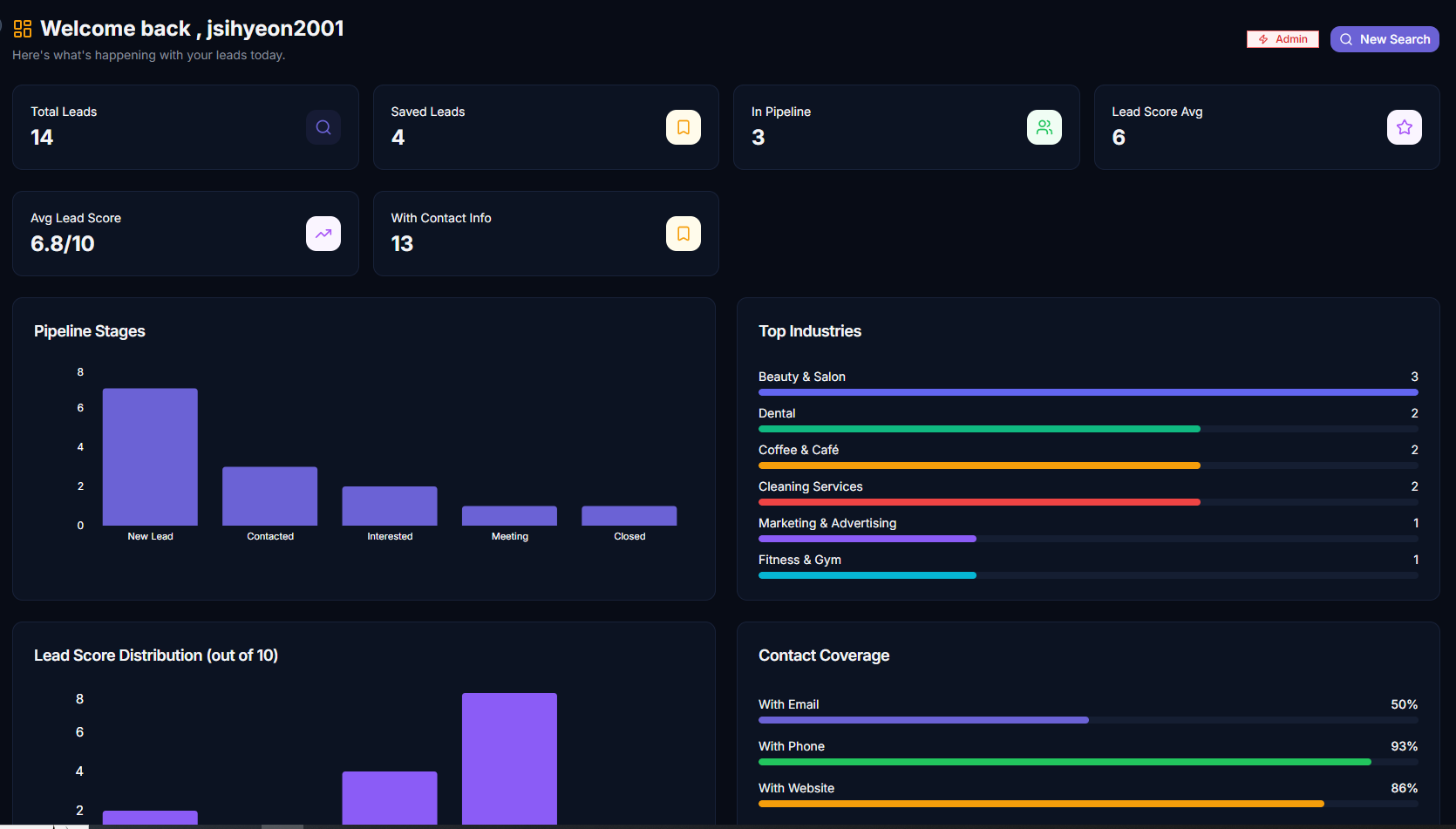
One screen for the health of your pipeline
LeadBoba includes additional sales management features. Users can view:
- Search activity
- Saved leads
- Lead scores
- Outreach performance
- Sales activity
RocketReach’s reporting is generally limited to contact search and export activity rather than a full outreach and pipeline view.
Who is each platform actually built for?
RocketReach
- Recruiters
- Enterprise sales teams
- Professionals searching for specific contacts
- Companies needing individual contact information
LeadBoba
- Marketing agencies
- Freelancers
- Local businesses
- Startups
- Consultants
- SMB sales teams
- Users who need business discovery, lead organization, CRM, and AI outreach in one platform
LeadBoba vs RocketReach, feature by feature
| Feature | LeadBoba | RocketReach |
|---|---|---|
| Business lead generation | Limited | |
| Person contact discovery | Limited | |
| Google Maps search | ||
| Email discovery | ||
| Phone number discovery | ||
| Website discovery | Limited | |
| Social media discovery | Limited | |
| Local business search | ||
| Built-in CRM | ||
| Lead pipelines | ||
| Lead notes | ||
| Gmail integration | ||
| AI email generation | ||
| AI writing assistance | ||
| Calendar tools | ||
| Lead map visualization | ||
| Sales dashboard | Limited |
Frequently asked questions
Is RocketReach a lead generation platform?
RocketReach is mainly a contact discovery platform focused on finding professional information about individuals.
Can LeadBoba find emails like RocketReach?
Yes. LeadBoba can collect email information as part of its business lead generation workflow.
Which platform is better for local business leads?
LeadBoba is designed for discovering businesses by industry and location, making it suitable for local business prospecting.
Which platform is better for finding executives?
RocketReach may be more suitable when the goal is finding specific professionals or decision makers.
Is LeadBoba a RocketReach alternative?
Yes. LeadBoba can work as a RocketReach alternative for businesses that need to discover companies, organize prospects, and manage outreach from one platform rather than looking up individual contacts.
So, which one should you choose?
RocketReach and LeadBoba solve different prospecting problems. RocketReach is focused on finding individual professional contacts — the right person at the right company.
LeadBoba focuses on discovering businesses and managing the complete sales workflow instead: Google Maps business discovery, website analysis, lead collection, CRM management, AI email generation, Gmail integration, analytics, and lead visualization.
For users who need specific employee contact information, RocketReach can be a useful tool. For businesses that want to discover companies, organize prospects, and manage outreach from one platform, LeadBoba provides a more complete solution.